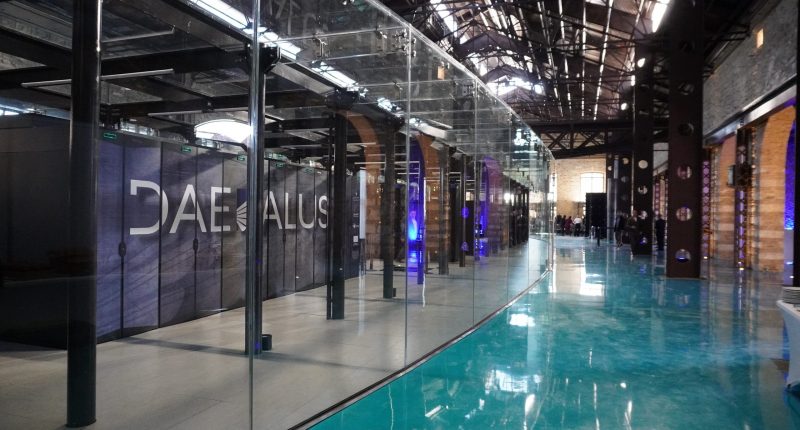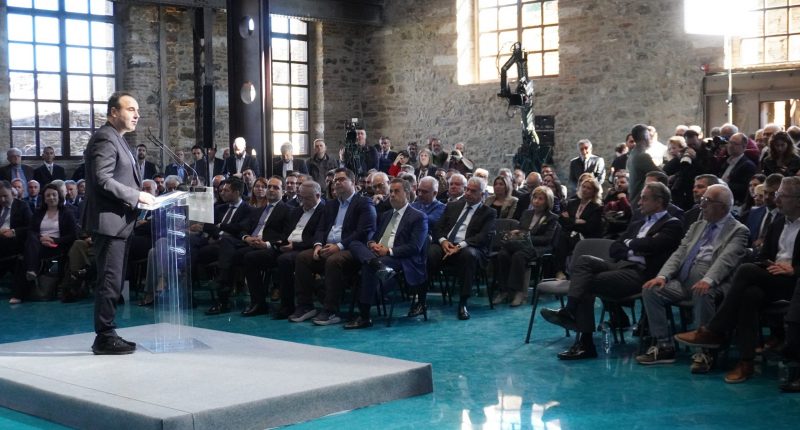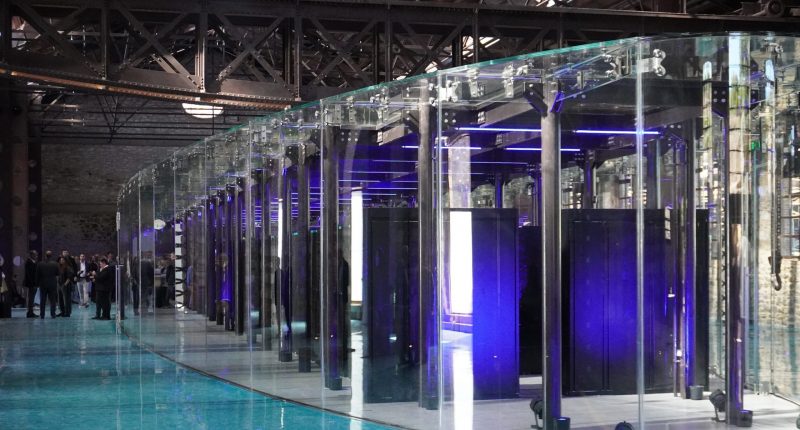
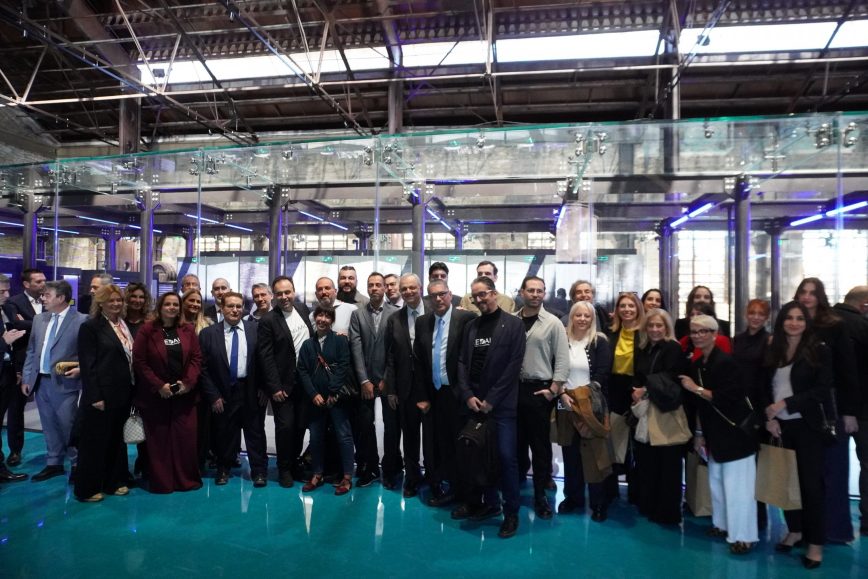
The inauguration of the new National Supercomputer ‘DAEDALUS’ took place on Monday, 19 October 2026, at the Lavrion Technological Cultural Park of the National Technical University of Athens, with the presence of the Prime Minister Kyriakos Mitsotakis. The Prime Minister and the Minister of Digital Governance and Artificial Intelligence, Dimitris Papastergiou, symbolically placed into operation the most powerful computing system Greece has ever acquired, marking an important milestone for research, innovation and the development of Artificial Intelligence applications.
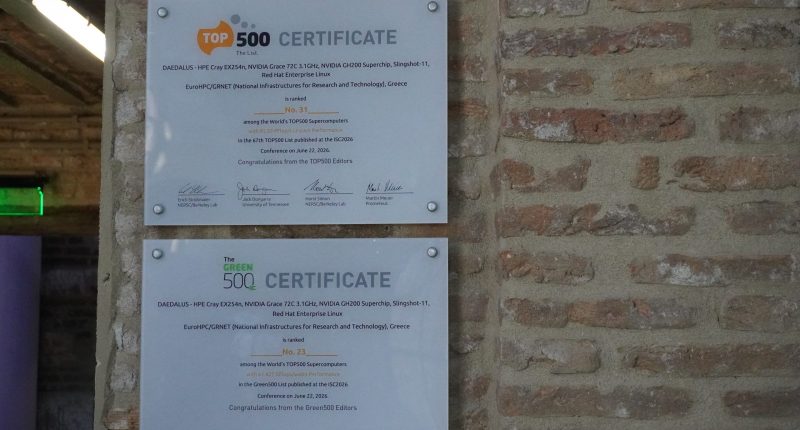
As of June 2026, with a measured computing performance of 85.69 PetaFlops, ‘DAEDALUS’ ranks 31st in the global TOP500 list and 23rd in the Green500, which assesses the energy efficiency of the world’s most powerful supercomputers. With ‘DAEDALUS’, Greece is now among the 14 countries worldwide with the strongest presence in the global supercomputing rankings.
Prime Minister Kyriakos Mitsotakis stated:
“Greece’s journey in technology, from lagging behind to being at the forefront, particularly in the field of Artificial Intelligence, has indeed been and continues to be extremely exciting. I would like to thank everyone who worked to make this project a reality. I can see the emotion in many people’s eyes, because I know how hard you all worked in order for us to reach this point today, where, as a country, we have one of the world’s most powerful supercomputers, while at the same time having it installed in a building of such great historical and cultural significance. We are building a ‘bridge’ from the Second Industrial Revolution, from the early 20th century, when we generated electricity in this space, to having installed a supercomputer with exceptional capabilities in the very same building. Now we are taking the next step: making this incredible computing power available to Greek researchers, the Greek business community, start-ups, and larger enterprises alike. Wishing all the good fortune ahead for DAEDALUS operations”.
Minister of Digital Governance and Artificial Intelligence Dimitris Papastergiou stated:
“There is something truly special about this place. It takes us on a journey from the Second to the Fourth Industrial Revolution. Where electricity was once generated, today we are transforming energy, data and human talent into Artificial Intelligence. With ‘DAEDALUS’, Greece becomes the 14th country in the world to acquire such infrastructure. And this is a huge step forward. ‘DAEDALUS’ is going live today and, once the necessary tests and technical adjustments have been completed, it will begin providing its services in December. We want our country to produce Artificial Intelligence, to have its own infrastructure and to make the most of its data here, in Greece and across Europe. We must provide universities, researchers and start-ups with the tools to create, innovate and the ability to retain talent in the country. With ‘DAEDALUS’, the new supercomputer coming to Kozani, and the capabilities of the AI Factories, we are building the infrastructure that can make Greece a leading player in the wider region. I would like to thank everyone who has worked to make this great project a reality. Because today, from historic Lavrio, we are taking a giant step towards the future.”
Thomas Skordas, Deputy Director-General of the European Commission’s Directorate-General for Communications Networks, Content and Technology (DG CONNECT), stated:
“It is a great honour to be in Lavrion today for the inauguration of the ‘DAEDALUS’ supercomputer. At a time when technological sovereignty and competitiveness are crucial, Europe is investing strategically in advanced computing. With EUR 36 million in support, ‘DAEDALUS’ strengthens Greece’s position at the heart of the digital future. Greece is among the first seven European countries to host an AI Factory, placing it firmly on the global supercomputing map. As the computing infrastructure of the PHAROS AI Factory, it will turn research into tangible social and economic impact by providing world-class computing power to Greek talent. Together, we are ensuring that Greece and Europe help shape the future.”
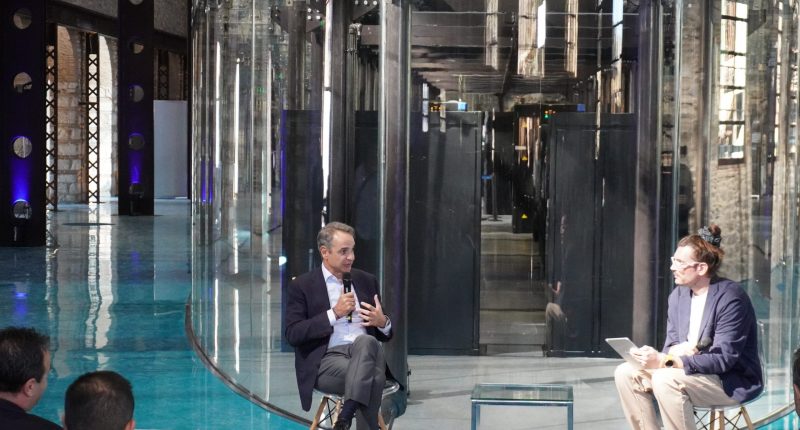
During the inauguration event, Prime Minister Kyriakos Mitsotakis took part in a discussion with technology journalist Timos Kouremenos, who hosted and moderated the event. The discussion focused on the progress of Greece’s digital transformation since 2019, the importance of technological sovereignty and the opportunities created by Artificial Intelligence for the country. Particular emphasis was placed on opportunities for young researchers and Greek start-ups, the use of Artificial Intelligence in the public sector and in citizens’ everyday lives, as well as the long-term contribution that ‘DAEDALUS’ can make to the country’s development.
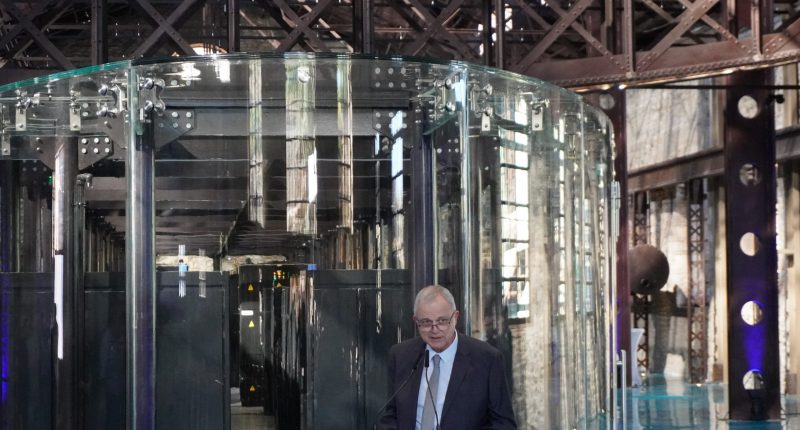
The Rector of the National Technical University of Athens, Professor Ioannis Hatzigeorgiou, delivered a welcome speech. The role of ‘DAEDALUS’ as a national High Performance Computing infrastructure was highlighted by Professor Stefanos Kollias, Chairman of GRNET, while Professor Nectarios Koziris, Greece’s National Representative of the EuroHPC Joint Undertaking, presented its position within the European supercomputing ecosystem. Afroditi Sevasti, CEO of the PHAROS AI Factory, focused on the potential use of computing power for research and innovation, while the European dimension of the project was presented by Thomas Skordas, Deputy Director-General of DG CONNECT at the European Commission.
‘DAEDALUS’ is implemented by GRNET – The National Infrastructures for Research and Technology, operating under the auspices of the Ministry of Digital Governance and Artificial Intelligence, under Greece’s National Recovery and Resilience Plan “Greece 2.0”, with funding from the European Union – NextGenerationEU and the EuroHPC Joint Undertaking.
Computing power for science, the economy and the public sector
‘DAEDALUS’ is based on advanced Hewlett Packard Enterprise (HPE) architecture, featuring NVIDIA GH200 accelerators and direct liquid-cooling technology. Its computing power will be used across a broad range of applications, from physics, chemistry and biomedical research to personalised healthcare, weather forecasting, climate and environmental modelling, energy, transport and cybersecurity.
It will also support the development of Generative AI applications and Large Language Models, as well as solutions for the Greek language, culture and the promotion of cultural heritage. The infrastructure will be available to the Greek and European scientific communities, universities, research centres, start-ups and SMEs, industry and the public sector, enabling the processing of large volumes of data, the execution of complex simulations and the development of new products and services.
The computing core of the PHAROS AI Factory
‘DAEDALUS’ forms the computing core of Greece’s PHAROS AI Factory, one of the first AI Factories in the European network. PHAROS combines computing resources, data, expertise and specialised support for the development of Artificial Intelligence applications, with a focus on three key areas: Health, Language and Culture, and Sustainability. Its objective is to transform research knowledge into Greek technological solutions, strengthening the country’s technological autonomy.
Implementation and funding
‘DAEDALUS’ represents a total investment of EUR 58.9 million, including VAT, implemented by GRNET in two interconnected stages.
The procurement and installation of the computing equipment, storage systems and software, as well as the provision of training services, were carried out by Hewlett Packard Enterprise, with a budget of EUR 41 million, including VAT.
The development of the electromechanical infrastructure and the Data Centre at the Lavrion Technological Cultural Park was carried out by MainSys S.A., with a budget of EUR 17.9 million, including VAT.
14 Questions and Answers on the National Supercomputer “DAEDALUS”
- What is ‘DAEDALUS’ and why is it important for Greece?
‘DAEDALUS’ is Greece’s new National Supercomputer and the most powerful computing system the country has ever acquired. It is a modern High Performance Computing (HPC) infrastructure capable of processing enormous volumes of data and performing highly complex calculations at very high speed.
With ‘DAEDALUS’, Greece gains new capabilities in scientific research, Artificial Intelligence and the development of advanced technological applications, strengthening its presence in the European and international supercomputing ecosystem.
- How powerful is ‘DAEDALUS’ and where does it rank internationally?
‘DAEDALUS’ has a measured computing performance of 85.69 PetaFlops, meaning that it can perform approximately 85.69 quadrillion computational operations per second.
It ranks 31st in the global TOP500 list of the world’s most powerful supercomputers and 23rd in the Green500, which evaluates their energy efficiency.
With ‘DAEDALUS’, Greece is now among the 14 countries worldwide with such a strong presence in the global supercomputing rankings.
- When will the first users be able to access ‘DAEDALUS’?
User access to ‘DAEDALUS’ will begin gradually in December, following the system’s full configuration.
The relevant calls, terms and access guidelines will be announced by GRNET.
The objective is to ensure that use of the infrastructure begins in an organised and technically secure manner.
- Who will be able to use its capabilities and through what process?
The computing power of ‘DAEDALUS’ will be available to the Greek and European scientific and academic communities, universities and research centres, start-ups and SMEs, industry and the public sector.
Access will be provided through specific procedures and calls issued by GRNET, the EuroHPC Joint Undertaking and the PHAROS AI Factory, depending on the scope of each activity.
Interested users will submit project proposals, which will be evaluated on the basis of their scientific or technological merit, computing requirements and the availability of resources.
The exact eligibility criteria and deadlines will be announced when the system enters production operation.
- What can ‘DAEDALUS’ do in practice? Are there specific examples?
Its applications cover a particularly broad range of fields, from healthcare and biomedical research to climate change, energy, transport, industry and cybersecurity.
Examples include:
- Healthcare: A research team could train Artificial Intelligence models using appropriately anonymised data, with the aim of enabling earlier disease detection or developing tools for personalised medicine.
- Civil Protection: ‘DAEDALUS’ could support complex climate models to improve the understanding of extreme weather events and the prediction of wildfire risks.
- Business and innovation: A Greek company could run simulations of new products or production processes, reducing testing time and improving design before production begins.
DAEDALUS will also support the development of Generative AI applications and Large Language Models, with potential applications in the Greek language, education and culture.
- Will ‘DAEDALUS’ be used only for Artificial Intelligence applications?
No. ‘DAEDALUS’ is a general-purpose supercomputer, designed for scientific and technological workloads requiring extremely high computing power.
Artificial Intelligence is one of its main areas of application, but its capabilities also extend to computational physics and chemistry, biology, meteorology, climate research, energy, industry and many other fields.
- What makes ‘DAEDALUS’ different from a conventional computer or a cloud service?
‘DAEDALUS’ has been designed for computational problems of an exceptionally large scale, requiring the simultaneous use of a very large number of processing resources.
In simple terms, it can perform highly demanding tasks within a practical timeframe, whereas conventional computing systems would require significantly more time or might not be able to execute them efficiently at all.
- What is the relationship between ‘DAEDALUS’ and the PHAROS AI Factory?
‘DAEDALUS’ is the computing core of Greece’s PHAROS AI Factory, one of the first AI Factories in the European network.
‘DAEDALUS’ provides computing power, while the PHAROS AI Factory combines this with data, expertise, tools, training and specialised support, enabling researchers, universities, businesses and public-sector organisations to develop Artificial Intelligence applications.
Its key priority areas are Health, Language and Culture, and Sustainability.
The initiative strengthens Greece’s technological autonomy by creating the conditions for the development of domestic Artificial Intelligence models and applications.
- What technology does ‘DAEDALUS’ use?
The system is based on advanced Hewlett Packard Enterprise (HPE) architecture and features NVIDIA GH200 accelerators, designed for highly demanding computational workloads and Artificial Intelligence applications.
It also uses Direct Liquid Cooling technology, which enables more efficient heat removal from computing components and reduces the energy required for cooling.
- Where is ‘DAEDALUS’ installed and what infrastructure does its Data Centre provide?
‘DAEDALUS’ has been installed at GRNET’s new Data Centre, located in the historic building of the former Power Station at the Lavrion Technological Cultural Park.
The building is a recognised industrial heritage site covering approximately 1,500 square metres, which has been transformed into a modern high-technology infrastructure.
The Data Centre has an installed power capacity of 6.3 MVA, meets the availability and reliability requirements of the international Uptime Institute, and operates in accordance with GRNET’s security policies.
- How is DAEDALUS’s energy efficiency ensured?
Energy efficiency was a key priority in the design of‘DAEDALUS’, which ranks 23rd globally in the Green500.
The system uses advanced Direct Liquid Cooling technology, combined with local climatic conditions and the ability to use free cooling for most of the year, reducing the energy required for cooling.
In addition, a 2 MWp photovoltaic park operates at the Lavrion Technological Cultural Park for self-consumption, helping to cover the facility’s energy needs.
- Will the public be able to visit ‘DAEDALUS’?
The facility has been designed to accommodate visitors, subject to the necessary security requirements.
As this is a computing infrastructure with demanding technical and operational requirements, access to the equipment is controlled.
Once the works in the surrounding area have been completed, further information will be provided regarding the possibility of organised visits.
- Who manages ‘DAEDALUS’?
‘DAEDALUS’ is operated and managed by GRNET – The National Infrastructures for Research and Technology, operating under the auspices of the Ministry of Digital Governance and Artificial Intelligence, within the European EuroHPC ecosystem.
Its operation is supported by specialised personnel and continuous technical monitoring to ensure the security, availability and efficient use of the infrastructure.
- How much did the project cost and how was it funded?
The project has a total budget of EUR 58.9 million, including VAT, and was implemented by GRNET in two stages.
Hewlett Packard Enterprise was responsible for the procurement and installation of the computing equipment, storage systems and software, as well as the provision of training services, with a budget of EUR 41 million, including VAT.
MainSys S.A. was responsible for the development of the electromechanical infrastructure and the Data Centre in Lavrion, with a budget of EUR 17.9 million, including VAT.
The project was funded under Greece’s National Recovery and Resilience Plan “Greece 2.0”, with resources from the European Union – NextGenerationEU and the EuroHPC Joint Undertaking.
Watch the inauguration ceremony here.