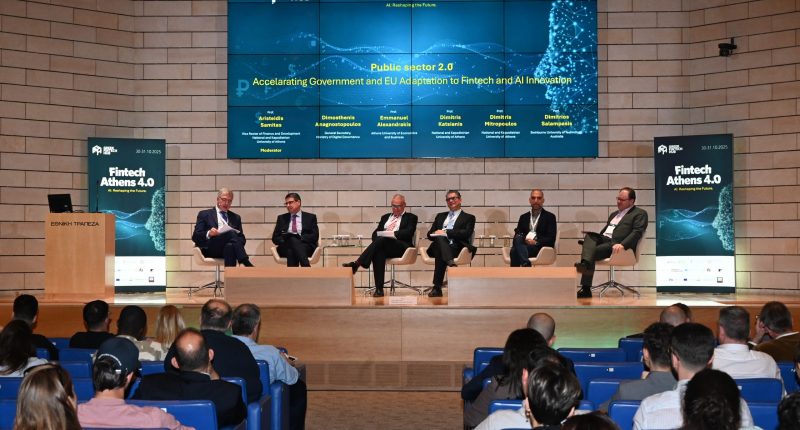
GRNET participated in the Fintech Athens 4.0 conference, held on 30-31 October 2025 at the National and Kapodistrian University of Athens (NKUA) and the National Bank of Greece (NBG).
Fintech Athens, now in its fourth year, is an initiative of Smart Attica EDIH, co-funded by the European Union, and organized by the National Bank of Greece and the Greek Fintech Hub. This year’s event brought together leading experts and executives from Central and Southeast Europe and the Middle East to discuss how AI is reshaping the Fintech landscape, from financial systems and education to tourism and the creative industries.
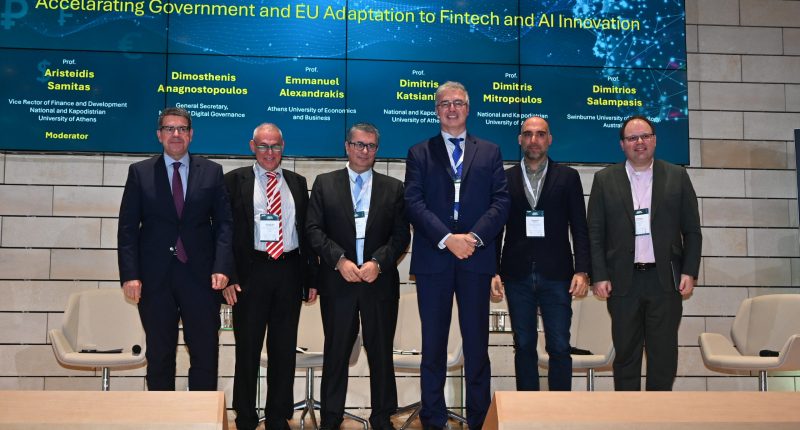
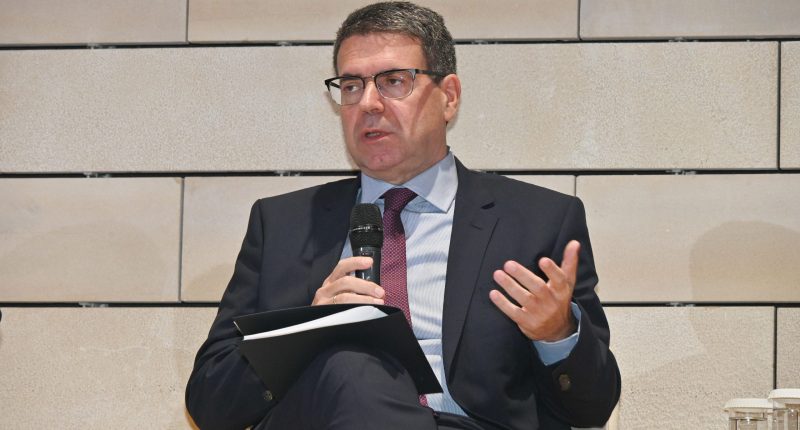
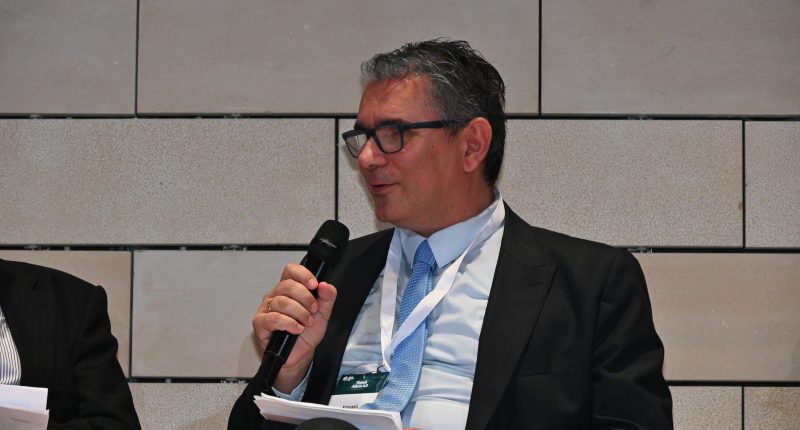
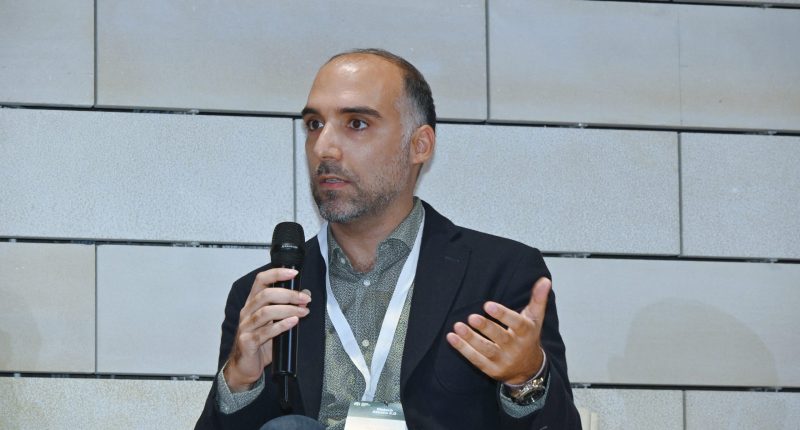
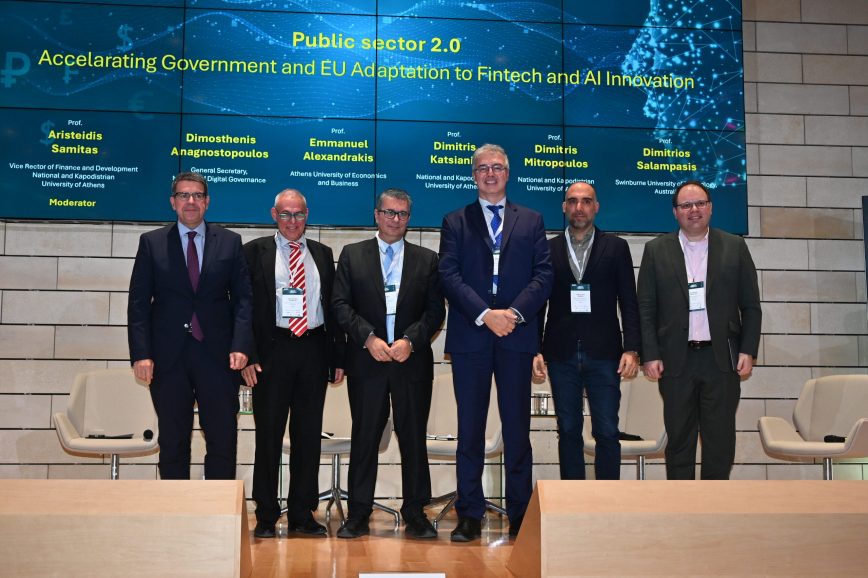
D. Anagnostopoulos, Secretary General for Information Systems and Digital Governance, D. Katsianis, Assistant Professor, NKUA and Deputy Chairman, GRNET, and D. Mitropoulos, Associate Professor, NKUA and Head of the Reliability Engineering Directorate, GRNET, took part in the panel discussion “Public Sector 2.0: Accelerating Government and EU Adaptation to Fintech and AI Innovation” alongside other distinguished experts.
The session focused on how emerging technologies, particularly artificial intelligence, decentralized systems and fintech innovation are transforming the way governments operate, deliver services and build trust with citizens.
Secretary General D. Anagnostopoulos highlighted that fintech and AI innovation are central to Greece’s digital modernization, emphasizing the need for a safe, interoperable and AI-enabled public sector. He pointed to initiatives under way such as the State’s single payment gateway and underlined the importance of European cooperation on regulation, interoperability, and cloud policy to accelerate adoption across member states.
Building on this perspective, Professor Katsianis discussed how AI can drive predictive, data-driven public policy, moving from hindsight to foresight in areas such as taxation, budgeting and risk management. He outlined how AI-enabled nowcasting and scenario modeling can enable real-time decision-making and more efficient resource allocation. He also addressed ethical and technical challenges in public-sector AI, from bias and fairness to privacy and model governance, highlighting the pivotal role of universities in establishing human-centric AI frameworks and equipping the next generation of civil servants with data and AI literacy. He concluded by noting that “We are moving the public sector to the early adopters at the beginning of the demand curve” emphasizing the importance of foresight, adaptability and innovation-readiness in digital governance.
Professor Mitropoulos underlined the need for a security-by-design approach to ensure resilience in AI-powered financial systems. He highlighted that “innovation and security reinforce each other, noting the need for defense-in-depth mechanisms, transparent and explainable AI models, and human oversight in critical decisions”. Addressing blockchain applications, he underlined their value for transparency in public procurement, while emphasizing that technology alone cannot solve governance challenges and that evidence-based, hybrid implementations are key to sustainable adoption.
GRNET’s participation reflects its continuous commitment to supporting digital transformation, AI adoption, and innovation in the public sector, in alignment with national and European strategies for trustworthy and human-centric technology.
You can view the full conference agenda here.