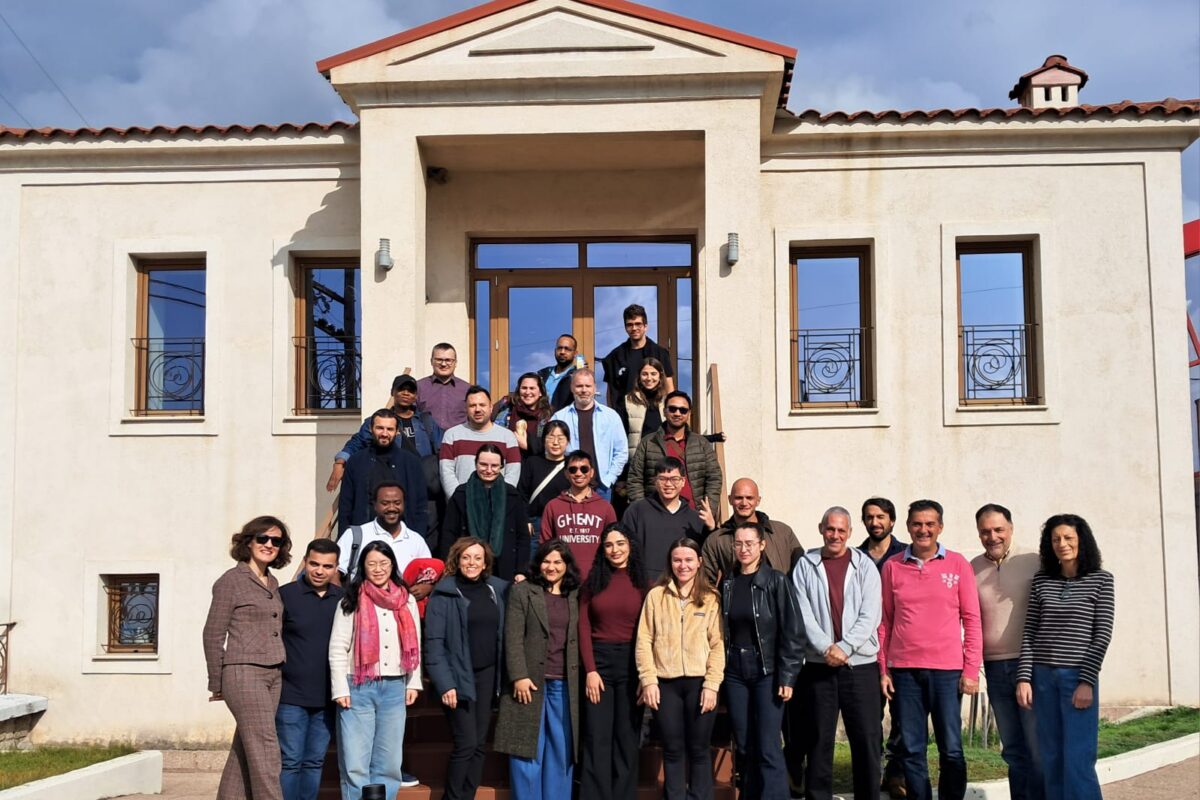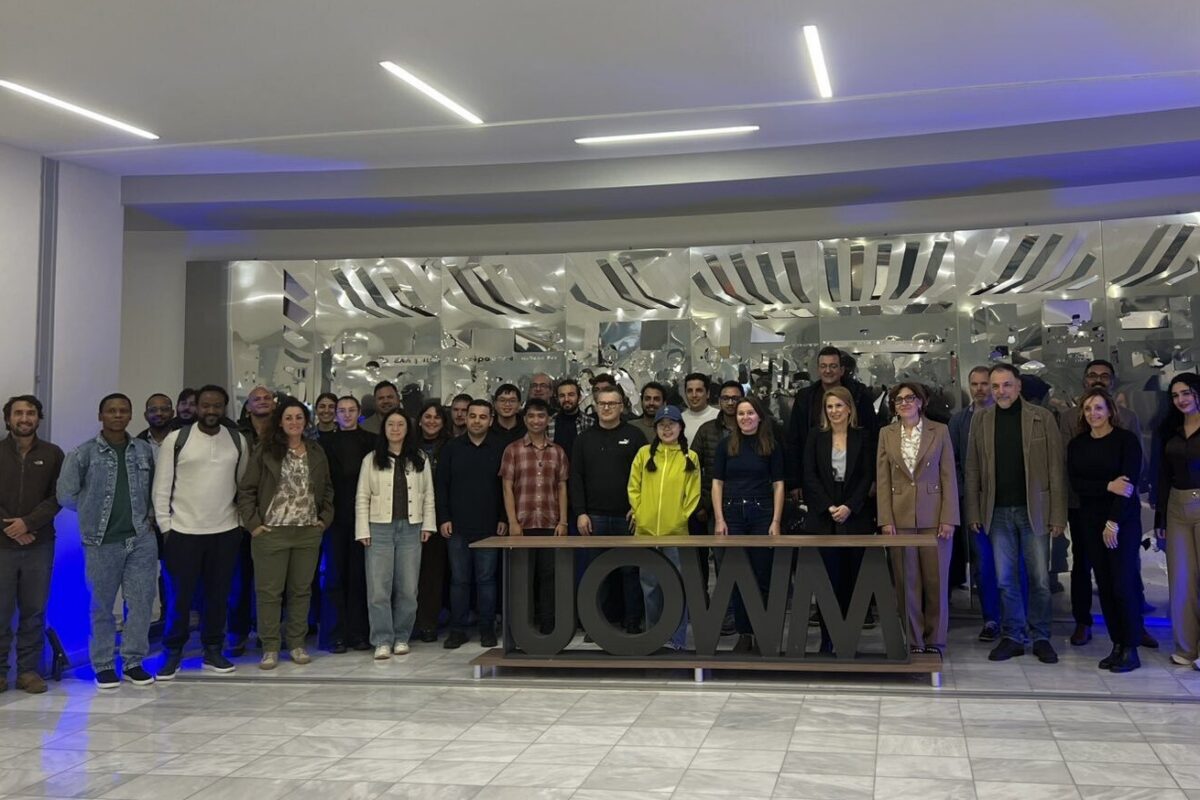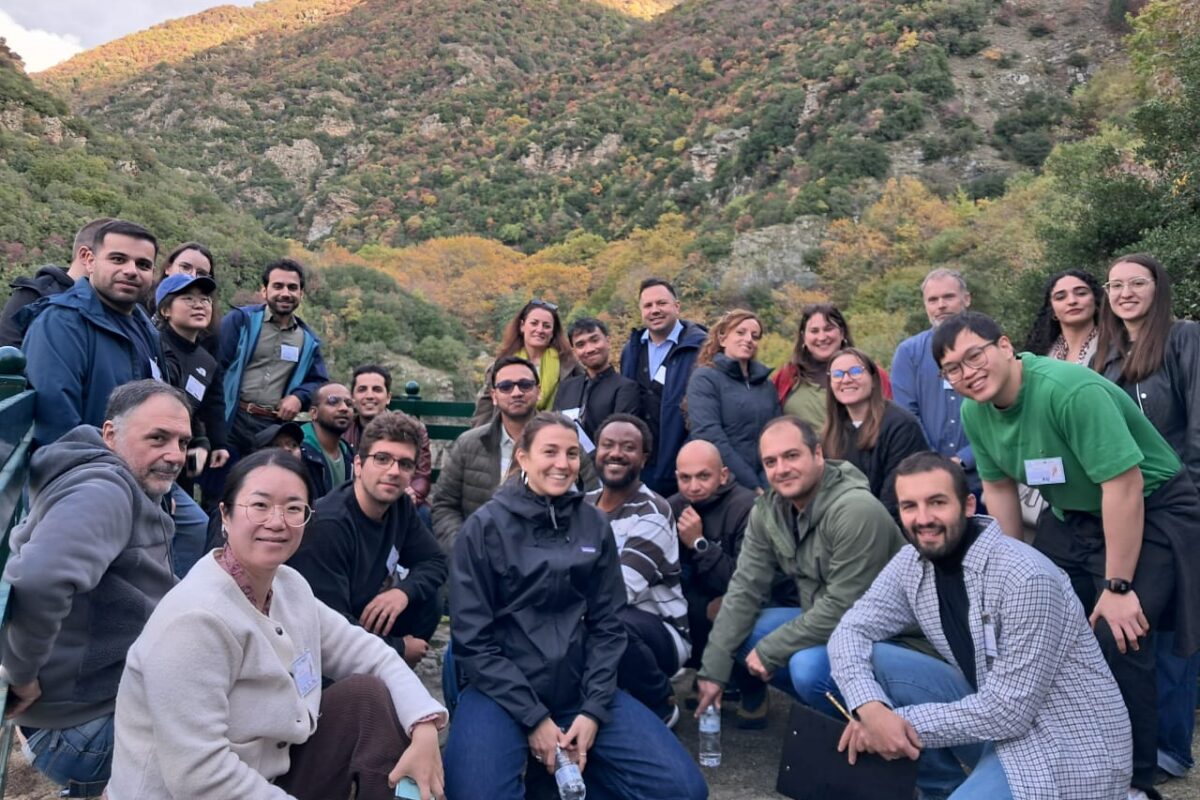

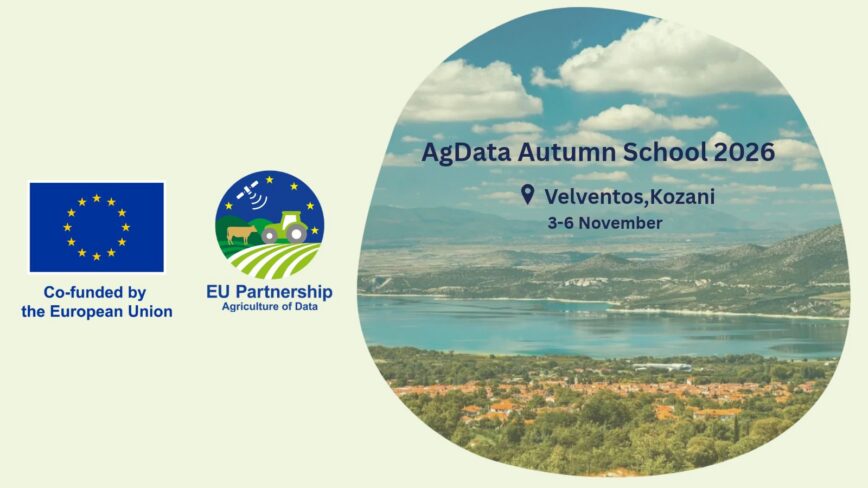
The European “Autumn School 2026” was successfully completed from 3 to 6 November at the Velventos Center for Environmental Education and Sustainability , bringing together 22 PhD students from 16 European Union countries and Israel and highlighting the role of digital data in shaping more sustainable agri-food systems.
The Autumn School, entitled “Strategic Research and Innovation Agenda (SRIA) as a reference framework to leverage applied research in Digital and Green Agriculture”, was organised in the framework of the European Agriculture of Data (AgData) Partnership. Τhe project is co-funded by the European Union, with the National Infrastructures for Research and Technology – GRNET participating as a partner.
The event opened with welcoming remarks by the Mayor of Velventos, Manolis Stergiou, who wished the School every success and spoke warmly about the participation and hospitality of the local community.
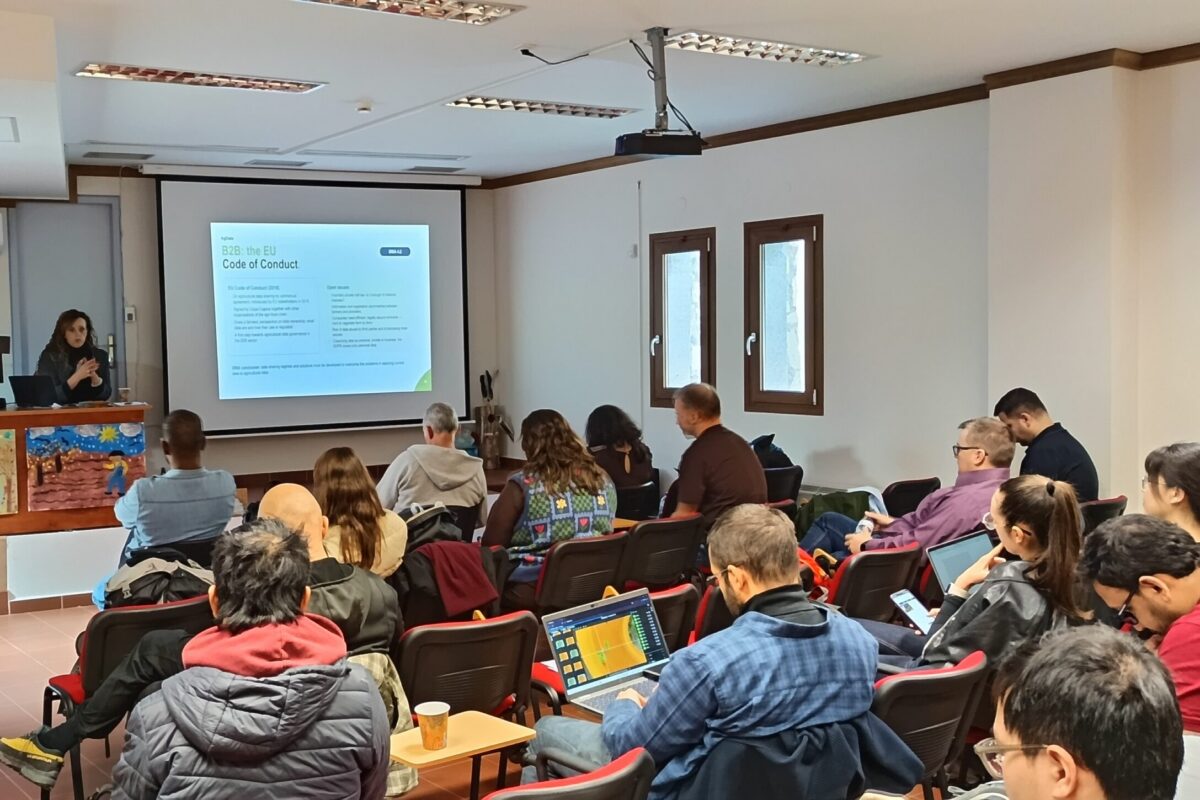
The programme presented key research areas related to the use of digital data and emerging technologies in agricultural production, as well as the associated socioeconomic and policy challenges. Particular emphasis was also placed on issues of ethics, governance and responsible data management.
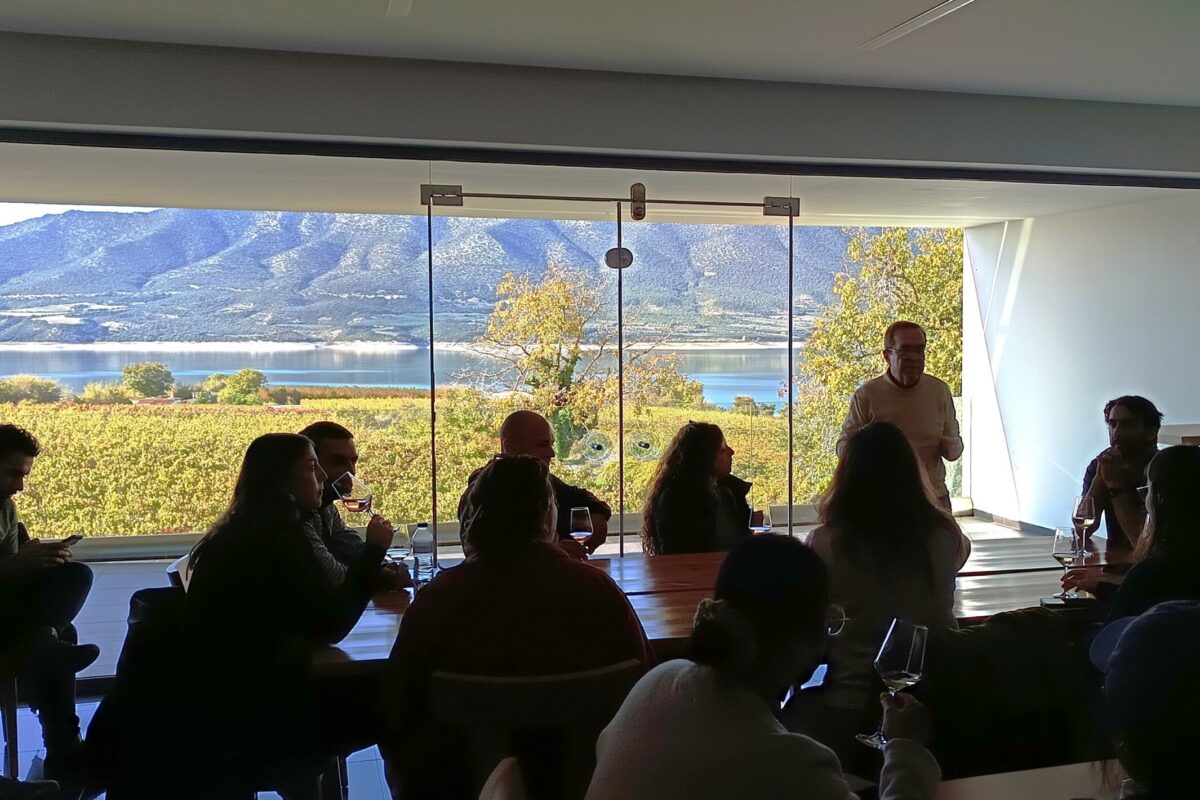
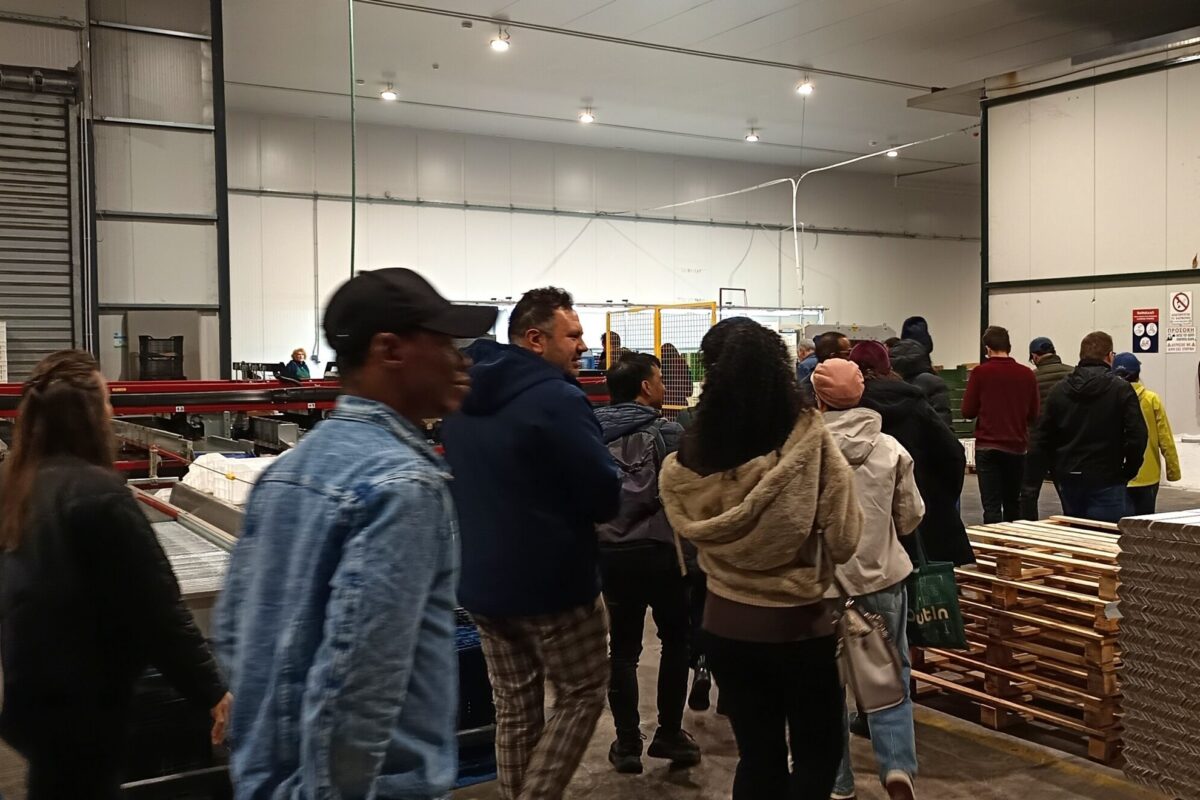
Through a series of lectures of significant scientific interest delivered by eight internationally recognised speakers, including the Chairman of GRNET and Professor Emeritus at NTUA, Stefanos Kollias, the Autumn School fostered knowledge exchange and interaction among early-stage researchers from different scientific disciplines. The aim was to strengthen participants’ skills in the use of data for agriculture, promote interdisciplinary research approaches and create new opportunities for collaboration supporting the digital and green transformation of the primary sector. The lecture programme was enriched by educational activities and visits to local agricultural cooperatives and processing facilities, with additional educational support from the team of the Environmental Education Centre.
As highlighted through the School’s activities, the use of data and digital technologies can make a substantial contribution to optimising agricultural practices, improving the management of natural resources and reducing the environmental footprint of agricultural production. Developing the relevant knowledge and skills is therefore an important prerequisite for building a more competitive and sustainable agri-food sector.
The selection of Velventos as the host location for the Agriculture of Data Partnership Autumn School 2026 was particularly significant. With its strong agricultural character and established agricultural cooperatives, the area provides a highly representative setting for an initiative of this kind. At the same time, the proximity to the University of Western Macedonia, whose administration invited members of the public and the School’s participants to a presentation on the University’s broader research and technological activities and the regional ecosystem, provided an opportunity to highlight the potential for linking scientific knowledge with local production and regional development.